
Research
Active studies from the CANDY Lab

Teen Inflammation Glutamate Emotion Research (TIGER)
The TIGER study seeks to understand the roles of inflammation and glutamate on behavioral and neural phenotypes of depression in adolescents.
Read more →
The TIGER study seeks to understand the roles of inflammation and glutamate on behavioral and neural phenotypes of depression in adolescents. We use dried blood spot testing to estimate peripheral levels of pro-inflammatory cytokines, magnetic resonance spectroscopy to image cortical glutamate, and multimodal MR imaging to characterize the structural and functional architecture of networks implicated in depression.
If you/your child are experiencing depression and want to become involved as a participant, click here.
If you or your child do not have a history of psychiatric or inflammatory conditions, click here.
- Current study protocol (R01 – Clinical Trial)
- Study protocol for TIGER (K01)
- Higher levels of pro-inflammatory cytokines associated with higher glutamate in ACC in depressed adolescents
- Inflammatory cytokines and callosal white matter microstructure in adolescents
- Social threat, fronto-cingulate-limbic morphometry, and symptom course in depressed adolescents

Effortless Assessment Research System (TIGER EARS)
EARS is a pioneering smartphone app that leverages data collected seamlessly from naturalistic phone usage in order to infer cognitive and affective states relevant for depression risk.
Read more →
MR imaging is currently not an accessible technology but smartphones are. EARS is a pioneering smartphone app that leverages data collected seamlessly from naturalistic phone usage (including social media use, keyboard content, and geolocation) in order to infer cognitive and affective states relevant for depression risk. The goal of TIGER EARS is to integrate digital phenotypes with neurobiological phenotypes in order to move toward scalable biomarkers of depression. TIGER EARS is being conducted in collaboration with Dr. Nicholas Allen at the University of Oregon and founder of Ksana Health.
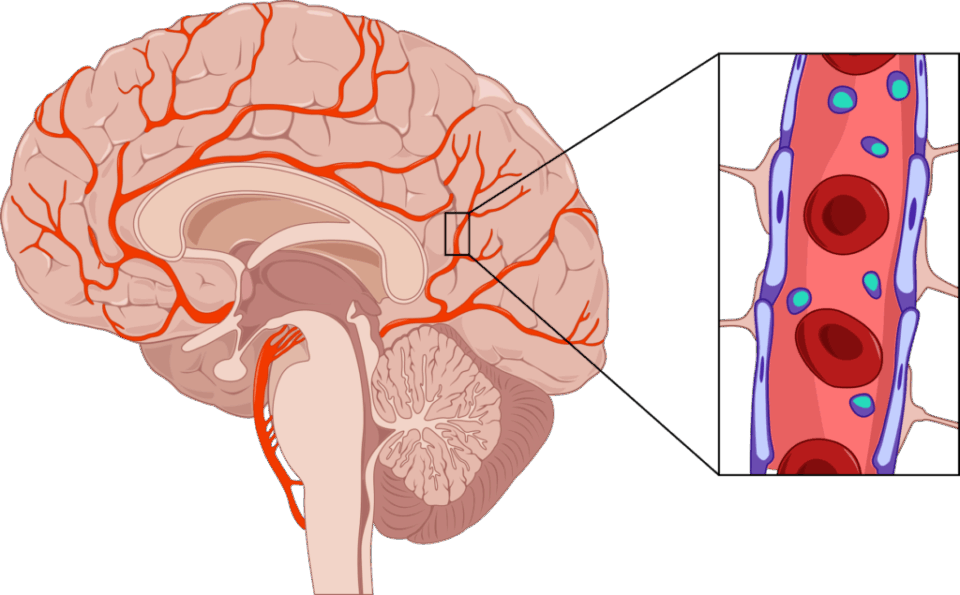
Blood–Brain Barrier Response to Immune Disruption: Gateways to Emotion (BRIDGE)
BRIDGE is a mechanistic study aimed at understanding how challenges to the immune system affect permeability of the blood–brain barrier, glutamate metabolism, cytokine production, gene expression of inflammatory genes, and measures of mood, motivation, and cognition.
Read more →
In collaboration with Drs. Mike Irwin and Steve Cole at the UCLA Cousins Center for Psychoneuroimmunology, BRIDGE is a mechanistic study aimed at understanding how challenges to the immune system affect permeability of the blood–brain barrier, glutamate metabolism, cytokine production, gene expression of inflammatory genes, and measures of mood, motivation, and cognition. This 10-hour long study takes place in-person at UCLA and will involve a subcutaneous injection (with either placebo or an inflammatory substance) and serial blood draws and MRI scans.

Barriers to Being on Antidepressants (BOBA) and Beliefs on Behaviors and Access to Social Media (BOBAS)
The BOBA study comprises focus groups and youth advisory boards to help researchers learn about the barriers that individuals who are historically underrepresented in biomedical research face.
Read more →
The BOBA study comprises of focus groups and youth advisory boards to help researchers learn about the barriers that individuals who are historically underrepresented in biomedical research face with respect to participating in research studies.
We are also actively recruiting for BOBAS, which focuses on how best to conduct studies focused on the role of social media and social behaviors in depression from youth with lived experience.

Social Processing Task (SPT)
The SPT study examines how social media use and responses to social information relate to brain function and depression risk in adolescents and young adults ages 14–21.
Read more →
How social information is processed, represented, and remembered in the brain has important implications for adolescent development and risk for depression. In this study, we are relating aspects of social media use and reactions to social stimuli with brain function in young people (ages 14–21 years). You will be asked to complete an online profile that will be shared only with others who are participating in this research, and will also need to complete an fMRI scan at UCLA.

Women’s Affect, Variability, Endocrinology, and Stress (WAVES)
WAVES is a dense-sampling project led by graduate student, Melanie Dratva, that focuses on the role of ovarian hormones dynamics on brain-derived neurotropic factors and mood health in typically cycling women.
Read more →
WAVES is a dense-sampling project led by graduate student, Melanie Dratva, that focuses on the role of ovarian hormones dynamics on brain-derived neurotropic factors and mood health in typically cycling women. This 6-week study will require daily saliva samples and questionnaires (to be completed remotely), weekly biospecimen collection at UCLA, and two MRI scans at UCLA.

Multimodal Assessment of Inhibitory Control in High Risk Adolescents (MICA)
This project examines whether inhibitory control and childhood adversity contribute to depression risk in daughters of mothers with depression. Using behavioral and neuroimaging measures, we examine risk factors for mood symptoms and their onset over 18 months.
Read more →
Daughters of depressed mothers are at higher-risk for developing major depressive disorder by early adulthood. To develop more targeted early identification and prevention efforts for this HR population, it is essential to clarify risk factors associated with this illness early in development. It is not yet clear whether inhibitory control across multiple levels of assessment (report, behavioral performance, neuroimaging task activation, and functional connectivity) is a relevant risk factor for depression, evident in those at high-risk before first onset. This project, in its data analysis stages, is examining the dimensionality and construct utility of inhibitory control in mother-daughter dyads, whether inhibitory control is concordant between mothers and daughters, and how childhood adversity and inhibitory control contribute to onset of mood symptoms over 18-month follow-ups.
Enhancing Neuroimaging Genetics through Meta-Analysis (ENIGMA)
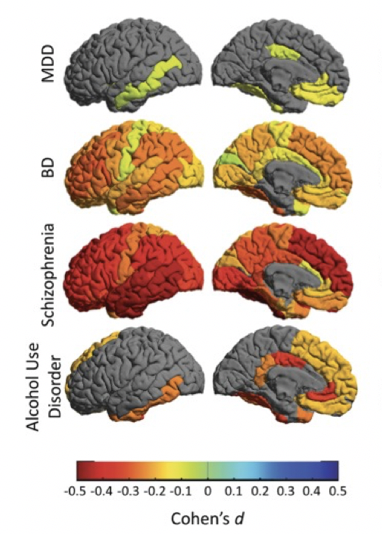
Dr. Ho collaborates with researchers around the globe through the ENIGMA consortium to identify the effects of depression and stress on brain morphometry and to examine sex differences and age-related effects on the brain.
Read more →
Dr. Ho collaborates with researchers worldwide through the ENIGMA consortium to examine how depression, stress, and childhood adversity shape brain structure across sex and age.